Top 10 Cheapest VPN Services
Surfshark is the best cheap VPN overall, combining a $2.49 monthly rate with unlimited devices. Here is the full ranked list.


By:Gunnar Kallstrom , Updated October 2, 2026 Head of Information Systems and Cybersecurity Research
Updated October 2, 2026A cheap VPN protects your internet traffic by hiding your IP address and encrypting your connection, and it does not have to cost much. The best cheap VPN services start under $3 a month on a long-term plan and still include strong encryption, a no-logs policy and apps for every major platform. Prices checked September 30, 2026. For the full ranking across all price points, see our best VPN services.
The catch with many affordable VPN deals is the renewal price. Several providers offer a deep introductory discount on a two-year or three-year plan, then charge more when the plan renews, though a few (PIA, Mullvad, hide.me) keep the renewal flat. To compare the real cost, take the total amount billed and divide it by the number of months covered. In this guide I walk through the 10 best budget VPN services I tested, with the effective monthly price, the billed total, the renewal rate and the refund window for each one.
AES-256 encryption (or equivalent), no-logs policies and a kill switch to block traffic if the VPN drops.
Servers across dozens of countries, with 10 Gbps connections on most networks.
Native apps for Windows, macOS, Android and iOS (see our picks for the best VPN for Mac, best VPN for Android and best VPN for iPhone), with most also supporting Linux and browser extensions.
Low monthly prices on long-term plans, with the billed total and renewal price included where the provider lists them.
Surfshark is the best cheap VPN overall, combining a $2.49 monthly rate with unlimited devices. Here is the full ranked list.
| Starting Price (4.3/5) | Security (5/5) | Server Coverage (4.9/5) | UX (4.9/5) | Compatibility (5/5) | Connectivity (5/5) | Top Features |
|---|---|---|---|---|---|---|
| $2.49/mo (27 mo, billed $67.23), $3.39/mo (15 mo, billed $50.85), $16.45/mo monthly. 2-year plan renews at $79/yr; monthly stays $16.45. | AES-256-GCM, WireGuard, no-logs audited by Deloitte | 4,500+ servers, 100 countries (per Surfshark) | Simple app, one-click connect | Windows, macOS, Linux, iOS, Android, Chrome, Firefox, Edge, Apple TV | Unlimited devices (fair-use policy), 10 Gbps servers |
|
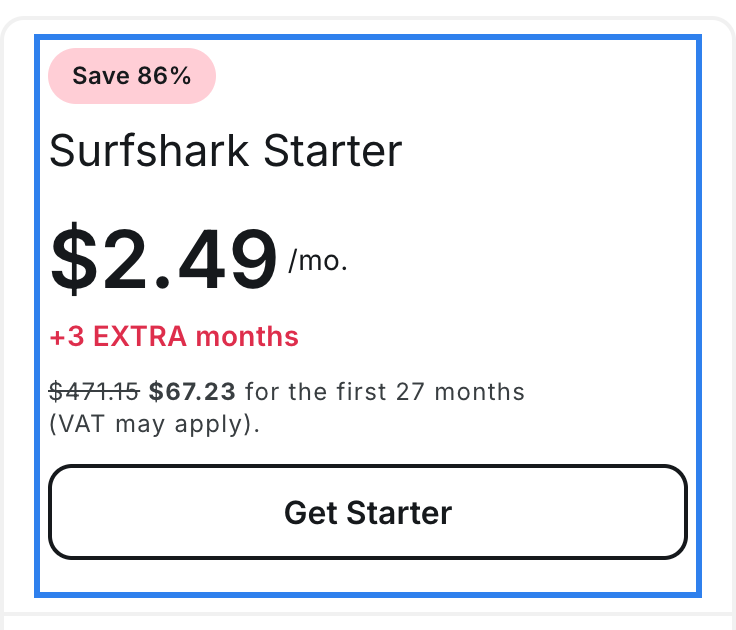
Surfshark is the best cheap VPN overall because it combines one of the lowest long-term prices with unlimited device connections and a strong set of privacy features. I found the apps easy to use across every platform, and the server network covers 100 countries (per Surfshark) with 4,500+ RAM-only servers running at 10 Gbps. Read our full Surfshark review.
The 27-month Starter plan costs $2.49 a month, billed $67.23 up front. A 15-month plan runs $3.39 a month (billed $50.85). Month to month is $16.45. After the intro term, Surfshark renews at $79 per year on the Starter tier, so your effective monthly cost rises to about $6.58. That renewal figure is listed on the official pricing terms page, not on the main pricing page, which is worth knowing before you buy.
Security is solid. Surfshark uses AES-256-GCM encryption (ChaCha20 on WireGuard), and Deloitte completed independent no-logs assurance reports in both 2023 and 2025. The company is based in the Netherlands. Dynamic MultiHop (double VPN), Bypasser (split tunneling) and a CleanWeb ad blocker are all included in the Starter plan.
Who is Surfshark best for?
Surfshark is best for anyone who wants a low-cost VPN they can run on every device in the household at once. Unlimited connections (subject to a fair-use policy) means one account covers phones, laptops, tablets and streaming boxes.
Recent upgrades to Surfshark:
Surfshark added its Dausos protocol (currently macOS only), post-quantum encryption on WireGuard by default and expanded to 4,500+ servers across 100 countries (per Surfshark).
Surfshark’s pricing:
The 27-month Starter plan is $2.49 a month, billed $67.23 for the first term. The 15-month plan is $3.39 a month (billed $50.85). Month to month is $16.45. On the long-term plans, Starter renews at $79 per year, One at $99 and One+ at $119. Monthly plans renew at their monthly rate ($16.45 Starter, $18.95 One, $21.85 One+). The 30-day money-back guarantee applies to the initial purchase only and is limited to one refund per service. Sign-ups through resellers are excluded, except those through Paddle, Google Play or Cleverbridge. Prepaid or gift card purchases, Alternative Number purchases, anonymous Dedicated IP purchases and free trials of 30 days or longer are also excluded.
Product details: Surfshark Starter includes the VPN, unlimited devices (fair-use policy), CleanWeb ad blocker, Bypasser split tunneling, rotating IP, Dynamic MultiHop, a masked email generator and Alternative ID. Dedicated IP is a paid add-on.
Pros and cons of Surfshark:

| Starting Price (4.6/5) | Security (5/5) | Server Coverage (4.6/5) | UX (4.9/5) | Compatibility (4.9/5) | Connectivity (5/5) | Top Features |
|---|---|---|---|---|---|---|
| $2.03/mo (39 mo, billed $79), $3.99/mo (12 mo, billed $47.88), $11.95/mo monthly. Renews flat. | AES-256 or AES-128 (OpenVPN), ChaCha20 (WireGuard), no-logs audited by Deloitte | 170 locations in 104 countries | Customizable interface, open-source apps | Windows, macOS, Linux, iOS, Android, Chrome, Firefox, Android TV, Apple TV, routers | Unlimited devices, 10 Gbps servers |
|
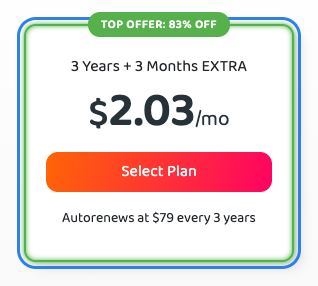
Private Internet Access offers the lowest effective monthly price among major VPN brands. At $2.03 a month on the 3-year + 3-month plan, billed $79 up front, PIA undercuts every other well-known provider on this list. (PrivateVPN’s $2.00 is lower on sticker price but from a smaller brand.) More importantly, PIA’s renewal stays flat: $79 every three years on the long plan and $47.88 per year on the annual plan.
PIA covers 104 countries across 170 locations with RAM-only 10 Gbps servers. The apps are fully open source, which means independent developers can review the code. A Deloitte audit confirmed the no-logs policy, though the exact year is not stated on PIA’s site. PIA supports WireGuard and OpenVPN, with a choice of AES-128 or AES-256 encryption.
PIA supports torrenting on every server, with port forwarding available on selected servers. If raw speed matters more than price, other providers on this list may be a better fit. But for a budget-conscious user who wants the lowest price per month from a major brand with a flat renewal, PIA is hard to beat.
Who is PIA best for?
PIA is best for cost-conscious users who want the lowest price from a major brand with no renewal surprises, plus torrenting support and an open-source codebase they can verify.
Recent upgrades to PIA:
PIA expanded to 104 countries, upgraded to 10 Gbps RAM-only servers across its network and added Apple TV and Android TV apps.
PIA’s pricing:
The 3-year + 3-month plan is $2.03 a month, billed $79 and renewing at $79 every three years. The 1-year plan is $3.99 a month (billed $47.88), renewing at $47.88 annually. Month to month is $11.95. The 30-day money-back guarantee applies to new or first-time users only and does not cover app-store purchases or users who requested a refund in the previous three months.
Product details: PIA includes the VPN, unlimited device connections, MACE ad blocker, split tunneling, multi-hop (VPN plus proxy server), obfuscation, Advanced Kill Switch, DNS leak protection, auto-connect by network type and a free email breach monitor. Antivirus (Windows only) and a dedicated IP are add-ons.
Pros and cons of PIA:
| Starting Price (4.7/5) | Security (5/5) | Server Coverage (5/5) | UX (5/5) | Compatibility (4.8/5) | Connectivity (4.5/5) | Top Features |
|---|---|---|---|---|---|---|
| $2.99/mo (24 mo, billed $71.76), $3.99/mo (12 mo, billed $47.88), $9.99/mo monthly. Long-term plans renew at $83.88/yr; monthly renews at $9.99/mo. | AES-256, 4096-bit RSA, perfect forward secrecy, no-logs audited by Securitum (2022 to 2026) | 20,000+ servers, 140+ countries | Clean design, Smart Protocol auto-select | Windows, macOS, Linux, iOS, Android, Chrome, Firefox, Chromebook, Apple TV, Android TV, Fire TV | 10 devices, 10 Gbps servers |
|
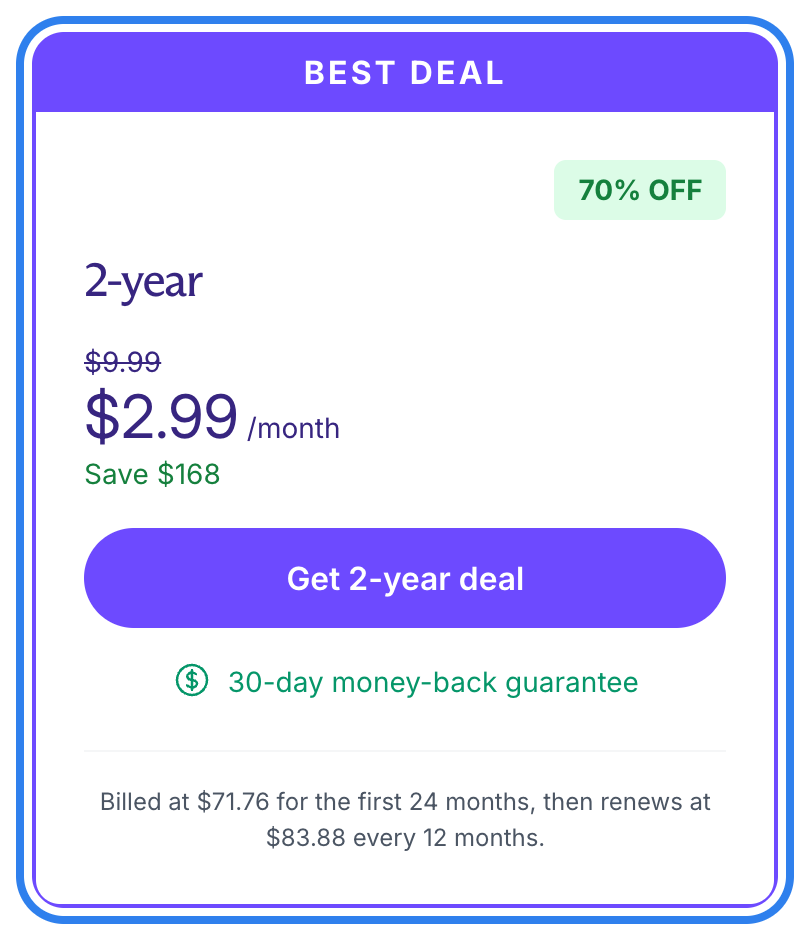
Proton VPN is the best cheap VPN if you want full transparency on what you will pay at renewal. Through our link, the 24-month Plus plan is $2.99 a month, billed $71.76. The 12-month plan is $3.99 a month (billed $47.88). Both long-term plans renew at $83.88 per year. The monthly plan is $9.99 and renews at $9.99. All renewal figures are stated clearly on every plan page. Read our full Proton VPN review.
Proton’s server network is the largest on this list: 20,000+ servers across 140+ countries, with 10 Gbps capacity. The company is based in Switzerland, which has strong privacy laws, and its no-logs policy has been independently audited by Securitum every year from 2022 through 2026 (five consecutive annual audits). The apps are all open source.
Proton also offers Secure Core, which routes traffic through hardened servers in Switzerland, Iceland and Sweden before reaching the exit server. This is Proton’s version of multi-hop. The Plus plan includes NetShield (ad and malware blocking), VPN Accelerator, Tor over VPN, streaming support and P2P on all servers.
Who is Proton VPN best for?
Proton VPN is best for privacy-focused users who want a clear, predictable renewal cost and the backing of a Swiss company with five years of consecutive independent audits.
Recent upgrades to Proton VPN:
Proton expanded to 20,000+ servers in 140+ countries, completed its fifth annual Securitum no-logs audit (2026) and added Stealth protocol for bypassing network restrictions.
Proton VPN’s pricing:
Through our link, the 24-month Plus plan is $2.99 a month, billed $71.76. The 12-month plan is $3.99 (billed $47.88). Month to month is $9.99, renewing at $9.99 monthly. Long-term plans renew at $83.88 per year. The 30-day money-back guarantee applies to paid plans.
Product details: Proton VPN Plus includes 10 simultaneous connections, Secure Core multi-hop, NetShield ad and malware blocker, VPN Accelerator, Tor over VPN, streaming and P2P support, split tunneling (Windows, macOS, Android, Linux, browser extension), kill switch on all platforms, priority support and live chat.
Pros and cons of Proton VPN:

| Starting Price (4.7/5) | Security (5/5) | Server Coverage (5/5) | UX (4.9/5) | Compatibility (5/5) | Connectivity (4.5/5) | Top Features |
|---|---|---|---|---|---|---|
| $3.49/mo (27 mo, billed $94.23), $5.49/mo (12 mo, billed $65.88), $14.99/mo monthly. Long-term plans renew at $139.08/yr; monthly stays $14.99. | AES-256, NordLynx, no-logs reviewed by PwC and Deloitte, Panama | 7,300+ servers, 225+ locations | Intuitive map-based interface | Windows, macOS, Linux, iOS, Android, Chrome, Firefox, Edge, Apple TV, Android TV | 10 devices, 10 Gbps RAM-only servers |
|
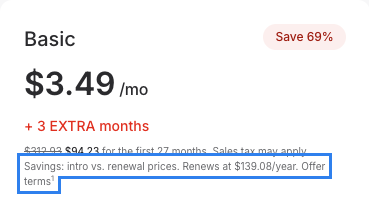
NordVPN is one of the most trusted names in the VPN market, and its 27-month Basic plan brings the cost down to $3.49 a month (billed $94.23). That is not the cheapest on this list, but NordVPN says it is the fastest VPN, citing testing by Artifact Security (June 2026) and West Coast Labs (October 2025), and it carries one of the most thorough audit histories of any provider. (NordVPN notes that some supporting sources for its speed claim were published through paid partnerships.) It sits at number four because the long-term plans renew at $139.08 per year, the highest renewal on this list. The monthly plan stays at $14.99. Read our full NordVPN review.
The server network includes 7,300+ servers across 225+ locations, all RAM-only and running at 10 Gbps. NordVPN is based in Panama. Its no-logs page says the policy has been reviewed six times (PwC in 2018 and 2020, Deloitte from 2022 onward), though another section of the same page lists five reviews. Torrenting is allowed on all standard servers.
Features include Double VPN (multi-hop), Onion Over VPN, Meshnet for creating a private encrypted network between your own devices, SmartPlay for streaming and post-quantum encryption. NordLynx is the proprietary protocol. Split tunneling is listed for Android, Android TV and Windows on NordVPN’s site.
Who is NordVPN best for?
NordVPN is best for users who prioritize speed and a well-audited brand and are willing to pay a higher renewal rate for it. The intro deal is competitive, but the long-term cost is above average.
Recent upgrades to NordVPN:
NordVPN added post-quantum encryption, expanded to 225+ server locations and launched NordWhisper, a new protocol for bypassing restrictions on tightly controlled networks.
NordVPN’s pricing:
The 27-month Basic plan is $3.49 a month, billed $94.23. The 12-month plan is $5.49 (billed $65.88). Month to month is $14.99. All long-term plans renew at $139.08 per year. The 30-day money-back guarantee covers the initial purchase only. Renewals are not refundable unless local law requires it. Apple App Store, Amazon Appstore and retailer purchases go through that seller’s refund process. Google Play refunds go through NordVPN support within the guarantee terms.
Product details: NordVPN Basic includes NordLynx and OpenVPN protocols, Double VPN, Onion Over VPN, obfuscated servers, Meshnet, private DNS, SmartPlay, kill switch, Dark Web Monitor and 10 simultaneous connections. Browser proxy extensions are available for Chrome, Firefox and Edge. Dedicated IP is an add-on.
Pros and cons of NordVPN:

| Starting Price (4.9/5) | Security (5/5) | Server Coverage (4.2/5) | UX (4.5/5) | Compatibility (4.2/5) | Connectivity (4.2/5) | Top Features |
|---|---|---|---|---|---|---|
| EUR 5/mo (about $5.67), no discount tiers, no renewal increase | WireGuard with quantum resistance, fourth infrastructure audit by Cure53 (second with Cure53, June 2024) | 566 servers in 50 countries, 91 cities | Simple, no-frills app | Windows, macOS, Linux, iOS, Android | 5 devices, 10 Gbps servers |
|
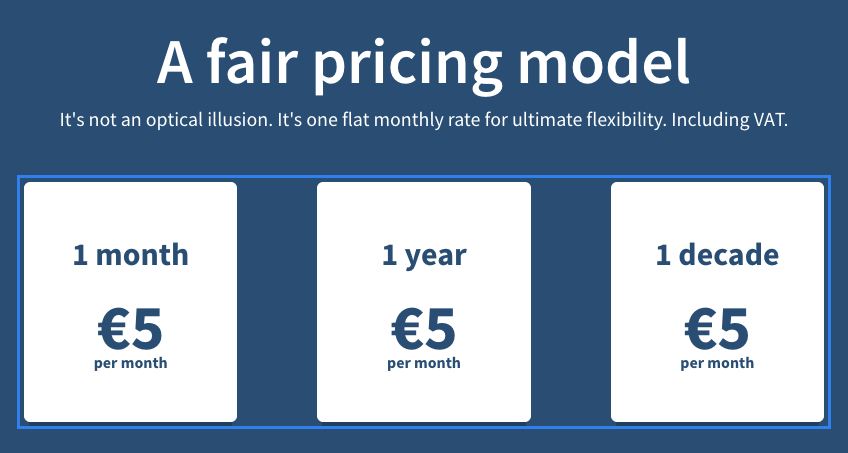
Mullvad is the best cheapest monthly VPN for users who want the full network with no contract. It charges the same EUR 5 (about $5.67) whether you pay for one month, one year or one decade. There are no introductory discounts, no subscriptions, no sales and no renewal increases. The price has not changed since Mullvad launched in 2009.
That simplicity carries through to the entire service. You sign up with a random account number. No email address, no username, no password. Mullvad accepts cash mailed in an envelope, Bitcoin, Monero, credit card, PayPal, bank wire and more. Crypto payments get a 10% discount.
Security is strong but the network is smaller. Mullvad runs 566 servers across 50 countries and 91 cities, all RAM-only. Mullvad’s infrastructure has been audited four times; the most recent was by Cure53 in June 2024 (the second with Cure53), and it found no critical issues. The apps default to WireGuard with quantum-resistant tunnels, and the kill switch is always on and cannot be turned off. DAITA (defense against AI-guided traffic analysis) is a newer feature designed to prevent machine-learning-based surveillance.
Who is Mullvad best for?
Mullvad is best for users who want a month-to-month VPN with no commitment and maximum anonymity. It is ideal if you prefer to avoid long-term contracts and want a predictable cost every month.
Recent upgrades to Mullvad:
Mullvad added DAITA, completed its migration to RAM-only infrastructure and made quantum-resistant tunnels the default on all platforms (February 2025).
Mullvad’s pricing:
EUR 5 per month, any length. That is about $5.67 at Mullvad’s own exchange rate (which moves over time). Crypto payments are 10% off. There are no discounts, no sales and no long-term plans cheaper than the monthly rate. Mullvad offers a 14-day refund, but it does not cover cash, cryptocurrency, vouchers, Apple App Store or reseller purchases.
Product details: Mullvad VPN includes WireGuard with post-quantum encryption, multihop, DAITA, DNS content blocking, IPv6 support, obfuscation via Shadowsocks bridges, split tunneling (Windows, macOS, Linux, Android) and an always-on kill switch. The account supports 5 simultaneous connections.
Pros and cons of Mullvad:

| Starting Price (4.9/5) | Security (4.8/5) | Server Coverage (4.9/5) | UX (4.9/5) | Compatibility (5/5) | Connectivity (4.9/5) | Top Features |
|---|---|---|---|---|---|---|
| $2.99/mo (28 mo, billed $83.72), $4.99/mo (15 mo, billed $74.85), $14.99/mo monthly. Long-term plans renew at $99.95/yr; monthly stays $14.99. | AES-256, Lightway protocol, KPMG-audited (June 2025), BVI jurisdiction | 113 countries, 214 locations | Polished interface, Smart Location auto-pick | Windows, macOS, Linux, iOS, Android, Chrome, Firefox, Edge, Brave, Apple TV, Android TV, routers | 10 devices (Basic), up to 40 Gbps |
|
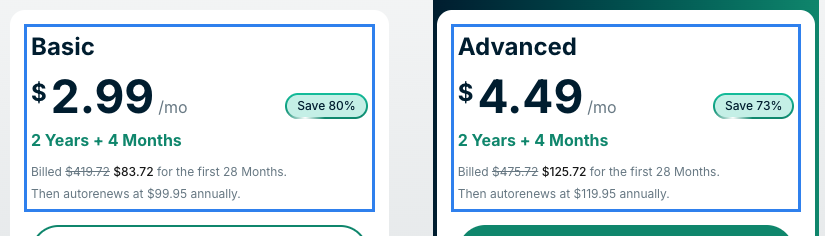
ExpressVPN is widely considered a premium VPN, and it is not usually the first name that comes to mind when searching for a cheap VPN service. But its current 28-month Basic plan brings the price to $2.99 a month (billed $83.72), which undercuts NordVPN’s 27-month deal. It ranks sixth here because the long-term plan renewal ($99.95 per year) is above the median, and competitors like Surfshark and PIA offer more devices at a lower price. The monthly plan stays at $14.99. Read our full ExpressVPN review.
What ExpressVPN does well is breadth and polish. It covers 113 countries across 214 server locations, with TrustedServer RAM-only infrastructure and up to 40 Gbps capacity. Lightway, the proprietary protocol, supports post-quantum encryption and is open-sourced at the core. KPMG audited ExpressVPN’s privacy commitments most recently in June 2025 (the third KPMG audit). The company holds ISO 27001, ISO 9001 and ISO 18295 certifications.
Split tunneling works on Windows, macOS, Linux, Android and iOS. The kill switch is on by default. Basic includes Lite Protection (which blocks ads and malicious sites); tracker blocking requires the Advanced tier. Multi-hop is not listed as a feature on ExpressVPN’s site as of September 2026.
Who is ExpressVPN best for?
ExpressVPN is best for users who want the widest platform support and a premium, polished experience, and who are willing to pay more at renewal for the quality of the apps and server coverage.
Recent upgrades to ExpressVPN:
ExpressVPN introduced a 28-month pricing tier at $2.99 a month, expanded to 113 countries and launched Lightway Turbo on Windows.
ExpressVPN’s pricing:
The 28-month Basic plan is $2.99 a month, billed $83.72, renewing at $99.95 per year. The 15-month plan is $4.99 (billed $74.85), also renewing at $99.95. Monthly is $14.99. Advanced ($4.49/mo on 28 months) adds a password manager (see our cheap password managers), tracker blocking, identity theft insurance and 12 devices. The 30-day money-back guarantee applies to new users only and does not cover renewals, redemption-code purchases or Apple App Store and Google Play in-app purchases.
Product details: ExpressVPN Basic includes 10 simultaneous devices, Lightway protocol with post-quantum encryption, TrustedServer, split tunneling, kill switch, Lite Protection, private encrypted DNS, Smart Location, automatic obfuscation, built-in speed test, ExpressMailGuard and 24/7 live chat support. Dedicated IP is an add-on.
Pros and cons of ExpressVPN:

| Starting Price (5/5) | Security (5/5) | Server Coverage (4.5/5) | UX (4.2/5) | Compatibility (5/5) | Connectivity (4.5/5) | Top Features |
|---|---|---|---|---|---|---|
| $2.69/mo (26 mo, billed $69.99), $4.23/mo (13 mo, billed $54.99), $11.99/mo monthly. Renews at the same price. | AES-256, WireGuard, no-logs confirmed by Securitum (announced July 2024) | 2,600+ servers, 92 locations | Clean interface, StealthGuard per-app control | Windows, macOS, Linux, iOS, Android, Chrome, Firefox, Edge, Apple TV, Android TV, Fire TV, routers | 10 devices, 10 Gbps servers |
|
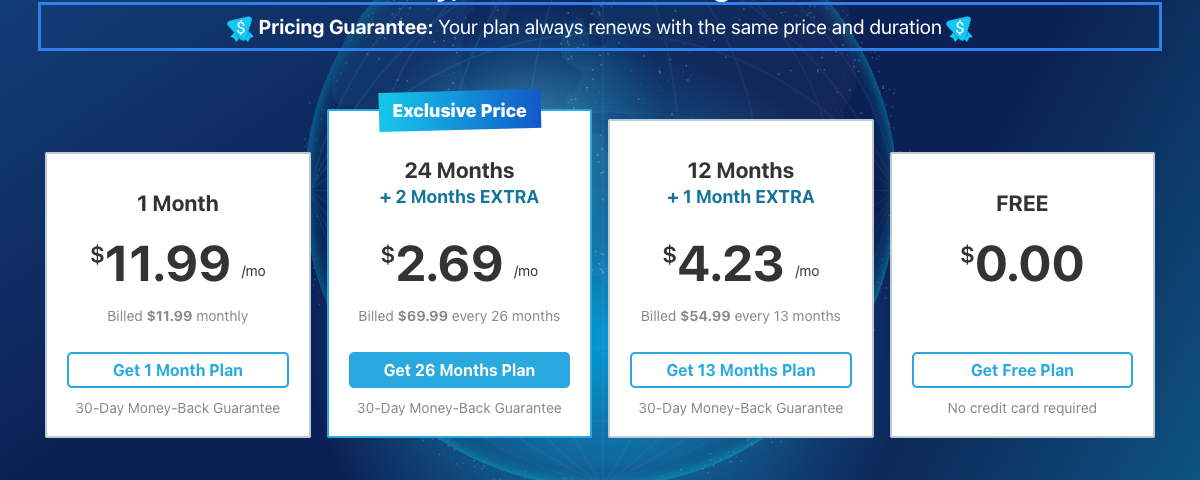
hide.me stands out on a cheap VPN list for one reason: its pricing guarantee. The plan you buy renews at the exact same price and duration. No introductory discount that jumps at renewal. The 26-month plan costs $2.69 a month (billed $69.99 every 26 months), and that is what you pay on every renewal cycle. The 13-month plan is $4.23 (billed $54.99). Month to month is $11.99.
hide.me is based in Malaysia, which has no mandatory data retention laws and sits outside the Fourteen Eyes. Securitum independently confirmed the no-logs policy (announced July 2024). The server network includes 2,600+ servers across 92 locations, all self-managed with 10 Gbps connections. Protocols include WireGuard, OpenVPN, IKEv2, SoftEther and hide.me’s own Bolt.
The feature set is competitive: Multihop Double VPN, split tunneling, StealthGuard (which forces chosen apps through the VPN), dynamic port forwarding, SmartGuard ad and malware blocking and a 30-day money-back guarantee on the first purchase. Up to 10 devices can connect at once.
Who is hide.me best for?
hide.me is best for users who want a low-cost VPN with zero renewal surprises. If predictable billing matters more than having the absolute lowest price, hide.me delivers.
Recent upgrades to hide.me:
hide.me added Bolt (its own fast-connect protocol), expanded to 2,600+ servers across 92 locations and published its 2025 annual transparency report.
hide.me’s pricing:
The 26-month plan is $2.69 a month, billed $69.99 and renewing at the same $69.99 every 26 months. The 13-month plan is $4.23 (billed $54.99), same renewal. Monthly is $11.99. The 30-day money-back guarantee covers the first order only, provided you have not previously claimed a refund or violated the terms. App-store purchases follow the store’s rules.
Product details: hide.me Premium includes up to 10 devices, Multihop Double VPN, split tunneling, StealthGuard, dynamic port forwarding, SmartGuard ad and malware blocker, Bolt and WireGuard protocols, a fixed IP address option, streaming-optimized servers, native IPv6 and 24/7 support.
Pros and cons of hide.me:

| Starting Price (5/5) | Security (4/5) | Server Coverage (4.3/5) | UX (4.9/5) | Compatibility (4.9/5) | Connectivity (5/5) | Top Features |
|---|---|---|---|---|---|---|
| $5.75/mo (yearly, billed $69), $9.00/mo monthly. Build-a-Plan from $3/mo (two locations + unlimited bandwidth add-on). | AES-256, WireGuard, Packetlabs server-stack audit (June 2024); no independent no-logs audit found in our review | 69+ countries, 135+ cities | Flexible Build-a-Plan model | Windows, macOS, Linux, iOS, Android, Chrome, Firefox, Edge, Apple TV, Android TV | Unlimited devices (personal use only) |
|
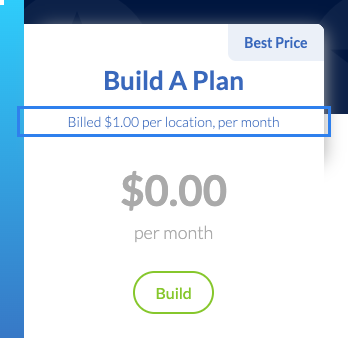
Windscribe takes a different approach to being an affordable VPN. Instead of long-term contract discounts, it offers a Build-a-Plan option where you pay $1 per month per server location. Pick two locations plus the unlimited bandwidth add-on ($1), and your bill is $3 a month (this covers only those two locations, not the full network). If you want the full network, Pro yearly costs $5.75 a month (billed $69 per year). Monthly Pro is $9.
The homepage promises “the price you signed up for is the price you pay, forever.” The upgrade page and terms do not repeat that exact language, so treat it as a marketing claim, but the pricing structure has no visible renewal jump. Windscribe’s apps are open source, and Packetlabs audited the server stack in June 2024. We did not find an independent audit of Windscribe’s no-logs policy in our review of its official site.
Instead of a traditional kill switch, Windscribe uses a Firewall feature on desktop that blocks all traffic outside the VPN tunnel. Mobile relies on the operating system’s Always-On VPN setting. R.O.B.E.R.T. handles DNS-level ad, tracker and malware blocking with up to 1,000 custom rules on Pro. The refund window is only 7 days, you must have used less than 10 GB, and you need to contact support for troubleshooting first.
Who is Windscribe best for?
Windscribe is best for users who only need a VPN in a few specific countries. The Build-a-Plan model can save money if you only need two or three locations.
Recent upgrades to Windscribe:
Windscribe added WStunnel and Stealth protocols for bypassing network restrictions and completed a Packetlabs audit of its server stack (June 2024).
Windscribe’s pricing:
Pro yearly is $5.75 a month, billed $69 every 12 months. Monthly Pro is $9. Build-a-Plan is $1 per location per month, starting at $3 (two locations plus the $1 unlimited bandwidth add-on). There is no 2-year or 3-year plan. The refund window is 7 days, under 10 GB used on the paid plan and first payment only; support troubleshooting is required before a refund is approved. Renewals are not refundable.
Product details: Windscribe Pro includes unlimited devices (personal use only, no account sharing; extreme use may result in a ban), access to 69+ countries and 135+ cities, R.O.B.E.R.T. with 1,000 custom rules, Firewall kill switch, split tunneling, six VPN protocols (WireGuard, OpenVPN UDP/TCP, IKEv2, Stealth, WStunnel), static IPs (extra cost), ephemeral port forwarding, auto-pilot location picker, secure hotspot, MAC spoofing and proxy gateway.
Pros and cons of Windscribe:

| Starting Price (4.8/5) | Security (4.5/5) | Server Coverage (4.2/5) | UX (4.6/5) | Compatibility (4.5/5) | Connectivity (4.8/5) | Top Features |
|---|---|---|---|---|---|---|
| $2.00/mo (36 mo, billed $72), $6.00/mo (3 mo, billed $17.99), $9.90/mo monthly. Renewal: $72 every 12 months after 36 months (per PrivateVPN). | AES-256, WireGuard, OpenVPN, no-logs policy (Swedish law); no independent audit found in our review | 200+ servers, 60+ countries | Simple app, remote setup help | Windows, macOS, iOS, Android, Linux, Chrome OS, Kodi, routers | 10 devices |
|
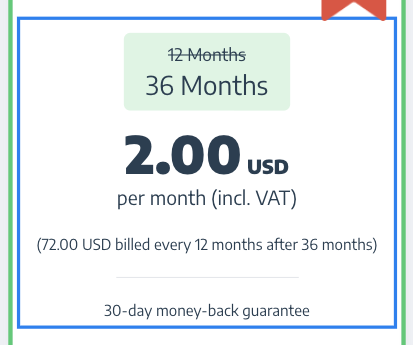
PrivateVPN has the lowest sticker price on this list: $2.00 a month on its 36-month plan, billed $72 up front. The 36-month deal is marketed as “12 months + 24 months extra,” making it a limited promotional offer. A 3-month plan costs $6.00 a month (billed $17.99), and month to month is $9.90.
The tradeoff for that low price is a smaller network and fewer advanced features. PrivateVPN runs 200+ servers across 60+ countries (its site says 63, though the server list shows about 62), the smallest network on this list. We did not find an independent audit of its no-logs policy in our review of the official site. The kill switch works on Windows, macOS and Android. The service is based in Sweden and supports WireGuard, OpenVPN, IKEv2 and several legacy protocols.
Where PrivateVPN stands out is torrenting. P2P is supported, with port forwarding on selected protocols and locations. The company also offers free remote setup help via chat.
Who is PrivateVPN best for?
PrivateVPN is best for budget users who want a low sticker price and torrenting support, and who do not need a large server network or advanced features.
Recent upgrades to PrivateVPN:
PrivateVPN added WireGuard protocol support and IPv6 leak protection across its app lineup.
PrivateVPN’s pricing:
The 36-month plan is $2.00 a month, billed $72 total. The 3-month plan is $6.00 (billed $17.99). Month to month is $9.90. The renewal price after the 36-month term is not clearly stated; the plan page reads “$72.00 USD billed every 12 months after 36 months,” which likely means $72 per year, but we cannot confirm this. The 30-day money-back guarantee is for new customers only, requires a stated reason, and excludes purchases below $45 (the 3-month plan at $17.99 falls below this), renewals, crypto payments and upgrades or added licenses. App Store purchases are refunded by Apple, not PrivateVPN.
Product details: PrivateVPN includes 10 simultaneous connections, a system-level kill switch (Windows, macOS, Android), WireGuard and OpenVPN protocols, AES-256 encryption, torrenting support, port forwarding on selected protocols and locations, static shared IPs, IPv6 and DNS leak protection and 24/7 customer support with remote setup help.
Pros and cons of PrivateVPN:

| Starting Price (5/5) | Security (4.5/5) | Server Coverage (4.5/5) | UX (4/5) | Compatibility (4.2/5) | Connectivity (5/5) | Top Features |
|---|---|---|---|---|---|---|
| $3.33/mo (3 yr, billed $120 once), $5.83/mo (1 yr, billed $69.99), $10.99/mo monthly. 1-yr renewal: $69.99/yr. | AES-256, WireGuard, Cure53 security audit (eighth annual, 2024), no-logs policy | 8,000+ servers, 47 countries | Beginner-friendly, bear-themed interface | Windows, macOS, iOS, Android, Chrome, Firefox | Unlimited devices |
|
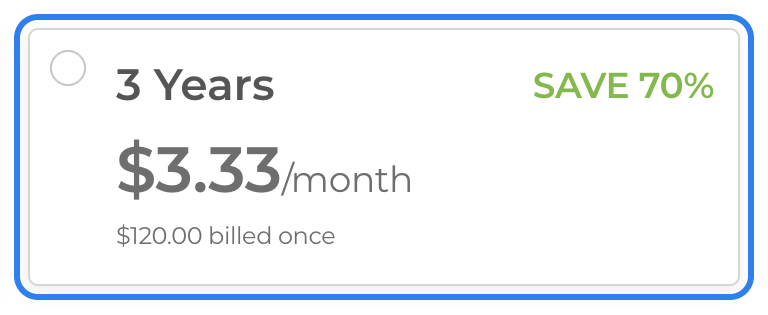
TunnelBear is the best budget VPN for beginners. The bear-themed apps are designed to be as simple as possible, making it a good choice for anyone setting up a VPN for the first time. The 3-year Unlimited plan costs $3.33 a month, billed $120 as a one-time payment. The 1-year plan is $5.83 (billed $69.99), and monthly is $10.99.
The 1-year plan renews at $69.99 per year, the same as the first-year price. The 3-year renewal price is not stated on TunnelBear’s site. TunnelBear runs 8,000+ servers across 47 countries and supports unlimited simultaneous devices. Cure53 conducts an annual white-box security audit (a code and infrastructure audit, not a no-logs audit specifically): the eighth, covering 2024, was completed with 8 auditors over 44 working days.
The refund policy is narrower than most. The 30-day money-back guarantee applies only to the first year of annual subscriptions purchased directly on tunnelbear.com. Monthly plans, team plans and app-store purchases are excluded. Shipping, handling and taxes are not refunded, and partial refunds are not available. Whether the 3-year plan qualifies is not stated on TunnelBear’s site.
Who is TunnelBear best for?
TunnelBear is best for first-time VPN users who want an easy setup, unlimited devices and the peace of mind of an annually audited service.
Recent upgrades to TunnelBear:
TunnelBear expanded to 8,000+ servers and completed its eighth annual Cure53 security audit (2024).
TunnelBear’s pricing:
The 3-year plan is $3.33 a month, billed $120 once. The 1-year plan is $5.83 (billed $69.99), renewing at $69.99 per year. Monthly is $10.99. The 30-day money-back guarantee applies only to the first year of annual plans bought on tunnelbear.com. Monthly plans and app-store purchases are excluded, shipping, handling and taxes are not refunded, and partial refunds are not available. Whether the 3-year plan qualifies is not stated. TunnelBear is based in Toronto, Canada.
Product details: TunnelBear Unlimited includes unlimited devices, VigilantBear kill switch, SplitBear split tunneling, GhostBear anti-censorship mode, WireGuard, OpenVPN and IKEv2 protocols, AES-256 encryption, P2P-friendly servers and city-level server selection. Multi-hop is not listed on TunnelBear’s site as of September 2026.
Pros and cons of TunnelBear:
The table below puts all 10 affordable VPN picks side by side on price, renewal cost, refund terms and key features.
| Provider | Best Overall Cheap VPN Score (4.85) Starting Price $2.49/mo (27 mo, $67.23), $16.45 monthly Money-Back Guarantee 30 days, conditions apply Server Network 4,500+ in 100 countries (per Surfshark) Simultaneous Connections Unlimited (fair use applies) Platform Compatibility Win, Mac, Linux, iOS, Android, browser ext, smart TV No-logs Policy Yes (Deloitte audited) Kill Switch Yes Split Tunneling Yes Renewal Price 2-yr: $79/yr; monthly: $16.45 Torrenting Support P2P servers exist; no official policy found | Score (4.83) Starting Price $2.03/mo (39 mo, $79), $11.95 monthly Money-Back Guarantee 30 days, conditions apply Server Network 170 locations in 104 countries Simultaneous Connections Unlimited Platform Compatibility Win, Mac, Linux, iOS, Android, browser ext, smart TV, routers No-logs Policy Yes (Deloitte audited) Kill Switch Yes Split Tunneling Yes Renewal Price 3-yr: $79/3yr; 1-yr: $47.88/yr; monthly: $11.95 Torrenting Support Yes, all servers | Score (4.83) Starting Price $2.99/mo (24 mo, $71.76), $9.99 monthly Money-Back Guarantee 30 days Server Network 20,000+ in 140+ countries Simultaneous Connections 10 Platform Compatibility Win, Mac, Linux, iOS, Android, browser ext, smart TV No-logs Policy Yes (Securitum, 5 annual audits) Kill Switch Yes Split Tunneling Yes (not listed for iOS) Renewal Price Long-term: $83.88/yr; monthly: $9.99/mo Torrenting Support Yes, all servers (Plus) | Score (4.87) Starting Price $3.49/mo (27 mo, $94.23), $14.99 monthly Money-Back Guarantee 30 days, conditions apply Server Network 7,300+ in 225+ locations Simultaneous Connections 10 Platform Compatibility Win, Mac, Linux, iOS, Android, browser ext, smart TV No-logs Policy Yes (PwC and Deloitte) Kill Switch Yes Split Tunneling Listed for Android, Android TV, Win Renewal Price Long-term: $139.08/yr; monthly: $14.99 Torrenting Support Yes, standard servers | Score (4.5) Starting Price EUR 5/mo (~$5.67), flat Money-Back Guarantee 14 days, conditions apply Server Network 566 in 50 countries Simultaneous Connections 5 Platform Compatibility Win, Mac, Linux, iOS, Android No-logs Policy Yes (Cure53 infra audit 2024) Kill Switch Yes (always on) Split Tunneling Yes (Win, Mac, Linux, Android) Renewal Price No increase (EUR 5/mo) Torrenting Support Not listed on Mullvad's site |  Score (4.9) Starting Price $2.99/mo (28 mo, $83.72), $14.99 monthly Money-Back Guarantee 30 days, conditions apply Server Network 214 locations in 113 countries Simultaneous Connections 10 Platform Compatibility Win, Mac, Linux, iOS, Android, browser ext, smart TV, routers No-logs Policy Yes (KPMG, 3 audits) Kill Switch Yes Split Tunneling Yes (all major platforms) Renewal Price Long-term: $99.95/yr; monthly: $14.99 Torrenting Support Not listed on ExpressVPN's site | Score (4.7) Starting Price $2.69/mo (26 mo, $69.99), $11.99 monthly Money-Back Guarantee 30 days, conditions apply Server Network 2,600+ in 92 locations Simultaneous Connections 10 Platform Compatibility Win, Mac, Linux, iOS, Android, browser ext, smart TV, routers No-logs Policy Yes (Securitum confirmed) Kill Switch Yes Split Tunneling Yes Renewal Price Same price (guaranteed) Torrenting Support P2P (port forwarding) | Score (4.68) Starting Price $5.75/mo ($69/yr), $9 monthly Money-Back Guarantee 7 days, conditions apply Server Network 69+ countries, 135+ cities Simultaneous Connections Unlimited (personal use) Platform Compatibility Win, Mac, Linux, iOS, Android, browser ext, smart TV No-logs Policy Yes (no independent no-logs audit found) Kill Switch Firewall (desktop); Always-On VPN (mobile) Split Tunneling Yes Renewal Price Same price (per site) Torrenting Support Yes (Pro, most locations) | Score (4.57) Starting Price $2.00/mo (36 mo, $72), $9.90 monthly Money-Back Guarantee 30 days, conditions apply Server Network 200+ in 60+ countries Simultaneous Connections 10 Platform Compatibility Win, Mac, Linux, iOS, Android, Chrome OS, Kodi, routers No-logs Policy Yes (no independent audit found) Kill Switch Yes (Win, Mac, Android) Split Tunneling Not listed as an in-app feature Renewal Price $72 every 12 months after 36 months (per PrivateVPN) Torrenting Support Supported | Score (4.53) Starting Price $3.33/mo (3 yr, $120), $10.99 monthly Money-Back Guarantee 30 days, conditions apply Server Network 8,000+ in 47 countries Simultaneous Connections Unlimited Platform Compatibility Win, Mac, iOS, Android, browser ext No-logs Policy Yes (Cure53 security audit, not no-logs specific) Kill Switch Yes (VigilantBear) Split Tunneling Yes (SplitBear) Renewal Price 1-yr: $69.99/yr; 3-yr: not stated Torrenting Support P2P-friendly servers |
|---|---|---|---|---|---|---|---|---|---|---|
| Score | (4.85) | (4.83) | (4.83) | (4.87) | (4.5) | (4.9) | (4.7) | (4.68) | (4.57) | (4.53) |
| Starting Price | $2.49/mo (27 mo, $67.23), $16.45 monthly | $2.03/mo (39 mo, $79), $11.95 monthly | $2.99/mo (24 mo, $71.76), $9.99 monthly | $3.49/mo (27 mo, $94.23), $14.99 monthly | EUR 5/mo (~$5.67), flat | $2.99/mo (28 mo, $83.72), $14.99 monthly | $2.69/mo (26 mo, $69.99), $11.99 monthly | $5.75/mo ($69/yr), $9 monthly | $2.00/mo (36 mo, $72), $9.90 monthly | $3.33/mo (3 yr, $120), $10.99 monthly |
| Money-Back Guarantee | 30 days, conditions apply | 30 days, conditions apply | 30 days | 30 days, conditions apply | 14 days, conditions apply | 30 days, conditions apply | 30 days, conditions apply | 7 days, conditions apply | 30 days, conditions apply | 30 days, conditions apply |
| Server Network | 4,500+ in 100 countries (per Surfshark) | 170 locations in 104 countries | 20,000+ in 140+ countries | 7,300+ in 225+ locations | 566 in 50 countries | 214 locations in 113 countries | 2,600+ in 92 locations | 69+ countries, 135+ cities | 200+ in 60+ countries | 8,000+ in 47 countries |
| Simultaneous Connections | Unlimited (fair use applies) | Unlimited | 10 | 10 | 5 | 10 | 10 | Unlimited (personal use) | 10 | Unlimited |
| Platform Compatibility | Win, Mac, Linux, iOS, Android, browser ext, smart TV | Win, Mac, Linux, iOS, Android, browser ext, smart TV, routers | Win, Mac, Linux, iOS, Android, browser ext, smart TV | Win, Mac, Linux, iOS, Android, browser ext, smart TV | Win, Mac, Linux, iOS, Android | Win, Mac, Linux, iOS, Android, browser ext, smart TV, routers | Win, Mac, Linux, iOS, Android, browser ext, smart TV, routers | Win, Mac, Linux, iOS, Android, browser ext, smart TV | Win, Mac, Linux, iOS, Android, Chrome OS, Kodi, routers | Win, Mac, iOS, Android, browser ext |
| No-logs Policy | Yes (Deloitte audited) | Yes (Deloitte audited) | Yes (Securitum, 5 annual audits) | Yes (PwC and Deloitte) | Yes (Cure53 infra audit 2024) | Yes (KPMG, 3 audits) | Yes (Securitum confirmed) | Yes (no independent no-logs audit found) | Yes (no independent audit found) | Yes (Cure53 security audit, not no-logs specific) |
| Kill Switch | Yes | Yes | Yes | Yes | Yes (always on) | Yes | Yes | Firewall (desktop); Always-On VPN (mobile) | Yes (Win, Mac, Android) | Yes (VigilantBear) |
| Split Tunneling | Yes | Yes | Yes (not listed for iOS) | Listed for Android, Android TV, Win | Yes (Win, Mac, Linux, Android) | Yes (all major platforms) | Yes | Yes | Not listed as an in-app feature | Yes (SplitBear) |
| Renewal Price | 2-yr: $79/yr; monthly: $16.45 | 3-yr: $79/3yr; 1-yr: $47.88/yr; monthly: $11.95 | Long-term: $83.88/yr; monthly: $9.99/mo | Long-term: $139.08/yr; monthly: $14.99 | No increase (EUR 5/mo) | Long-term: $99.95/yr; monthly: $14.99 | Same price (guaranteed) | Same price (per site) | $72 every 12 months after 36 months (per PrivateVPN) | 1-yr: $69.99/yr; 3-yr: not stated |
| Torrenting Support | P2P servers exist; no official policy found | Yes, all servers | Yes, all servers (Plus) | Yes, standard servers | Not listed on Mullvad's site | Not listed on ExpressVPN's site | P2P (port forwarding) | Yes (Pro, most locations) | Supported | P2P-friendly servers |
| Learn More | LEARN MORE On Surfshark's official website | LEARN MORE On PIA's official website | LEARN MORE On Proton VPN's official website | LEARN MORE On NordVPN's official website | LEARN MORE On Mullvad's official website | LEARN MORE On ExpressVPN's official website | LEARN MORE On hide.me's official website | LEARN MORE On Windscribe's official website | LEARN MORE On PrivateVPN's official website | LEARN MORE On TunnelBear's official website |
I signed up for and personally tested each of the 10 inexpensive VPN services on this list, rating them across six factors. The scores shown are our existing ratings from across our VPN coverage. Here is how each factor applies when looking for a cheap VPN.
I checked whether each provider has an independently audited or confirmed no-logs policy, not just a marketing claim. Providers with audits from firms like Deloitte, KPMG, Securitum and Cure53 offer stronger evidence. Beyond that, I looked for three specific security features:
Providers that have been audited multiple times and publish the results offer the strongest evidence for their privacy claims.
A wide server network means more options for bypassing geographic restrictions and finding a fast, nearby connection. I counted verified server locations and countries for each affordable VPN provider. Proton VPN’s 20,000+ servers in 140+ countries led the list, while PrivateVPN’s 200+ servers in 60+ countries was the smallest. I also noted whether a provider uses RAM-only servers (which cannot store data between reboots) and whether it operates virtual server locations.
A low-cost VPN still needs to be easy to use. I tested the desktop and mobile apps for each provider, looking for a clean interface, quick connection times and clear labeling of features. TunnelBear scored well for its beginner-friendly design. Windscribe’s Build-a-Plan model is flexible but harder to understand on first use.
This is the category that matters most when shopping for a cheap VPN. I collected the effective monthly price on every available plan length, the billed total, the renewal price after the introductory term ends and the money-back guarantee terms. A provider that advertises $2 a month but renews at $12 is not truly cheap over the life of the subscription. The effective monthly cost is the total amount billed divided by the number of months covered. Providers with flat or same-price renewals (PIA, Mullvad, hide.me) stand out for long-term value on this metric. Every price on this page was checked on the provider’s own website on September 30, 2026.
I checked for native apps on Windows, macOS, Linux, iOS and Android, plus browser extensions and smart TV or router support. Providers with apps across all five major platforms and at least one browser extension scored highest. I also looked at the number of simultaneous connections allowed, which ranges from 5 (Mullvad) to unlimited (Surfshark, PIA, Windscribe, TunnelBear).
I tested each budget VPN for connection stability and feature access, including split tunneling, torrenting support and ad blocking. Speed figures from our own tests are not included on this page because our test data is not current for all 10 providers. Where third-party reviewers consistently note speed as a strength or weakness, I note it in the review without quoting a number.
PrivateVPN has the lowest sticker price at $2.00 a month on its 36-month plan (billed $72). Private Internet Access is close behind at $2.03 a month on its 3-year + 3-month plan ($79), and it has a flat renewal (no price increase). Surfshark is $2.49 a month on a 27-month plan ($67.23). For month-to-month use without a contract, Mullvad charges a flat EUR 5 (about $5.67) for access to its full network.
On this list, the 10 providers’ long-term plans range from $2.00 to $5.75 a month. One-year plans run $3.99 to $5.83. Month-to-month plans without a contract range from about $5.67 (Mullvad) to $16.45 (Surfshark), with Windscribe’s Build-a-Plan starting at $3 for two locations. Upfront billed totals range from $17.99 (PrivateVPN’s 3-month plan) to $120 (TunnelBear’s 3-year plan). Renewal terms vary: some providers renew annually, some every two or three years, and Mullvad uses top-ups with no renewal cycle. PIA, Mullvad and hide.me keep the renewal price flat.
For access to a full server network with no contract, Mullvad is the cheapest on this list at EUR 5 (about $5.67) per month. Other full-network providers on this list charge $9 to $16.45 for a single month. Windscribe’s Build-a-Plan starts at $3 a month but covers only two server locations at that price, not the full network.
A low price does not mean low security. Every VPN on this list uses strong encryption and has a stated no-logs policy. Several have been independently audited or confirmed by firms like Deloitte, KPMG, Securitum and Cure53. When choosing a cheap VPN, look for known brands that publish audit results and have a clear subscription-based business model. For our picks and how we evaluated them, see our best VPN services page.
Many VPN providers use introductory pricing to attract new users. The first term (often two or three years) is heavily discounted, sometimes by 70% to 85% off the monthly rate. When that term ends, the plan renews at a higher rate. NordVPN, for example, charges $94.23 for the first 27 months and then $139.08 per year at renewal. Surfshark’s 2-year Starter plan renews at $79 per year. Not every provider follows this pattern: PIA’s 3-year plan renews at $79 every three years (the same rate), Mullvad charges a flat EUR 5 per month with no renewal cycle and hide.me guarantees the same price at every renewal.
Several providers on this list offer a limited free tier. For a full comparison, see our best free VPNs.
A long-term plan is cheaper per month for every provider on this list except Mullvad, which charges the same rate regardless of length. For example, Surfshark costs $2.49 a month on a 27-month plan but $16.45 if you pay month to month. The tradeoff is the upfront commitment: you pay $67.23 at once instead of $16.45 per month. If you plan to use a VPN for at least a year, the long-term deal saves you money. If you only need a VPN for a week or a short trip, the monthly price plus a refund window (where available) can be the cheaper route.

About The Password Manager, Gunnar Kallstrom:
Kallstrom, The Password Manager, is a Cyber Team Lead for a Department of Defense (DOD) contracting company in Huntsville, Alabama, and has worked as a Computer Network Defense (CND) Cyber Analyst. An author and content creator for a cybersecurity academy, Kallstrom spent nearly 15 years in the Army as a musician before entering the cybersecurity field.
He holds a bachelor’s degree in music from Thomas Edison State University and a master’s in organizational development and leadership from the University of the Incarnate Word.
Kallstrom has completed several CompTIA courses, including Security+, Network+, A+ Core 1, and A+ Core 2. He earned a Computing Technology Industry Association (CompTIA) Security+ Certification. Additionally, he has completed the Cyber Warrior Academy program with more than 800 hours of hands-on, intensive, and lab-driven technical training in cybersecurity methods and procedures.
Passionate about all things cyber, Kallstrom was a speaker on a panel at the 2022 InfoSec World conference, giving a talk entitled “Hacking into a Cyber Career – True Stories.” Kallstrom is also a mentor to entry-level cybersecurity candidates seeking to break into the field. When he’s not working, he still enjoys playing guitar and fishing (not phishing).