/ The Best Password Managers With Autofill of 2026
The Best Password Managers With Autofill of 2026
RoboForm is the best password manager with autofill based on our testing. See our other top picks for the best password managers with autofill of 2026.
By:Gunnar Kallstrom , Updated June 2, 2026 Head of Information Systems and Cybersecurity Research
Password managers with autofill are incredibly useful tools for managing and securing your passwords. If you, like many others, have countless online accounts, it can be challenging to remember and keep track of all your passwords.
With autofill functionality, password managers automatically fill in your login credentials for websites and apps, saving you time and eliminating the need to remember complex passwords. They also provide a secure storage solution, encrypting your passwords and protecting them from unauthorized access. See our recommendations for the best password managers with above-average autofill capabilities.
Supports OTP, TOTP, email/SMS, and built-in authenticator; lacks hardware key support
Batch login
Built-in TOTP authenticator
Local-only storage
Bookmark manager
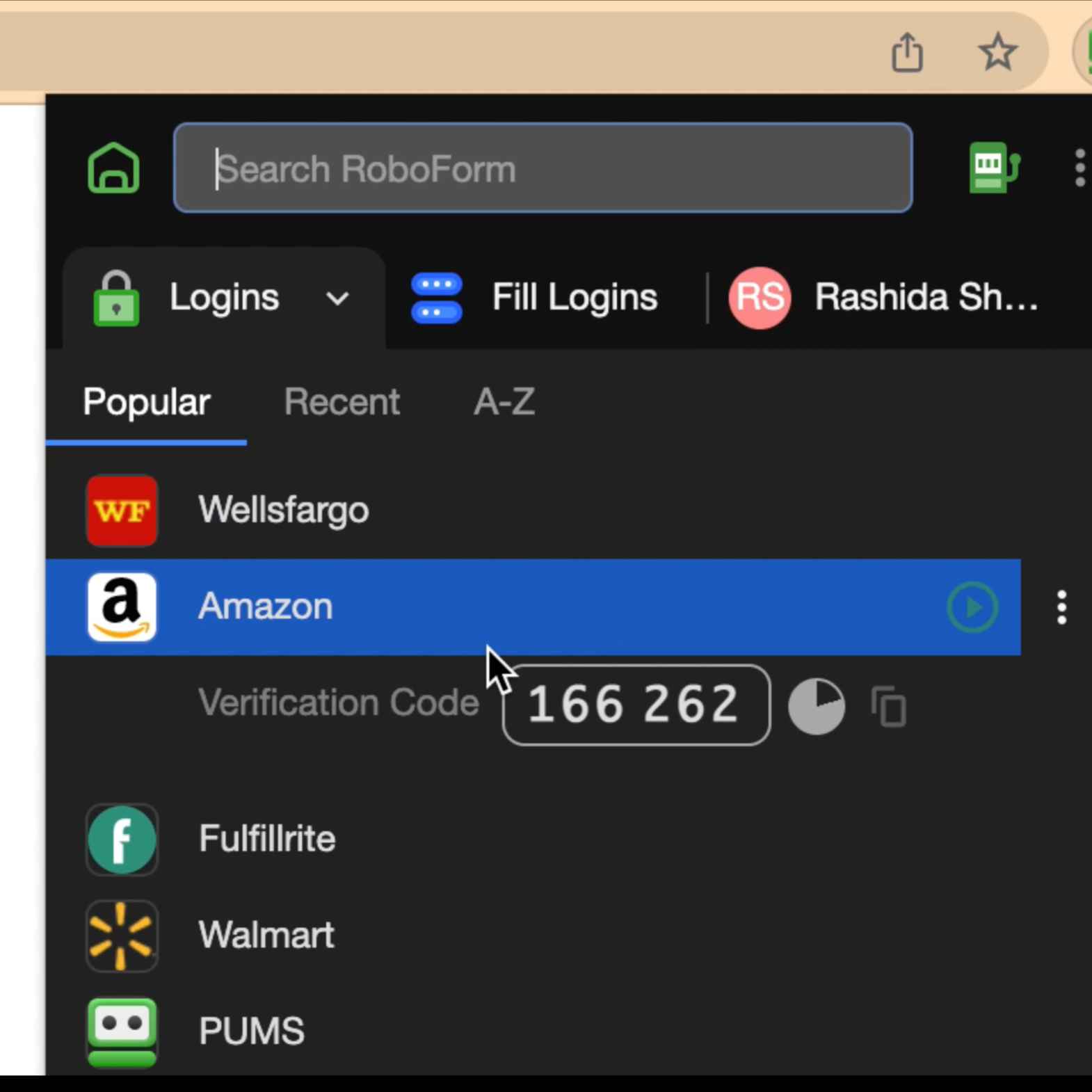
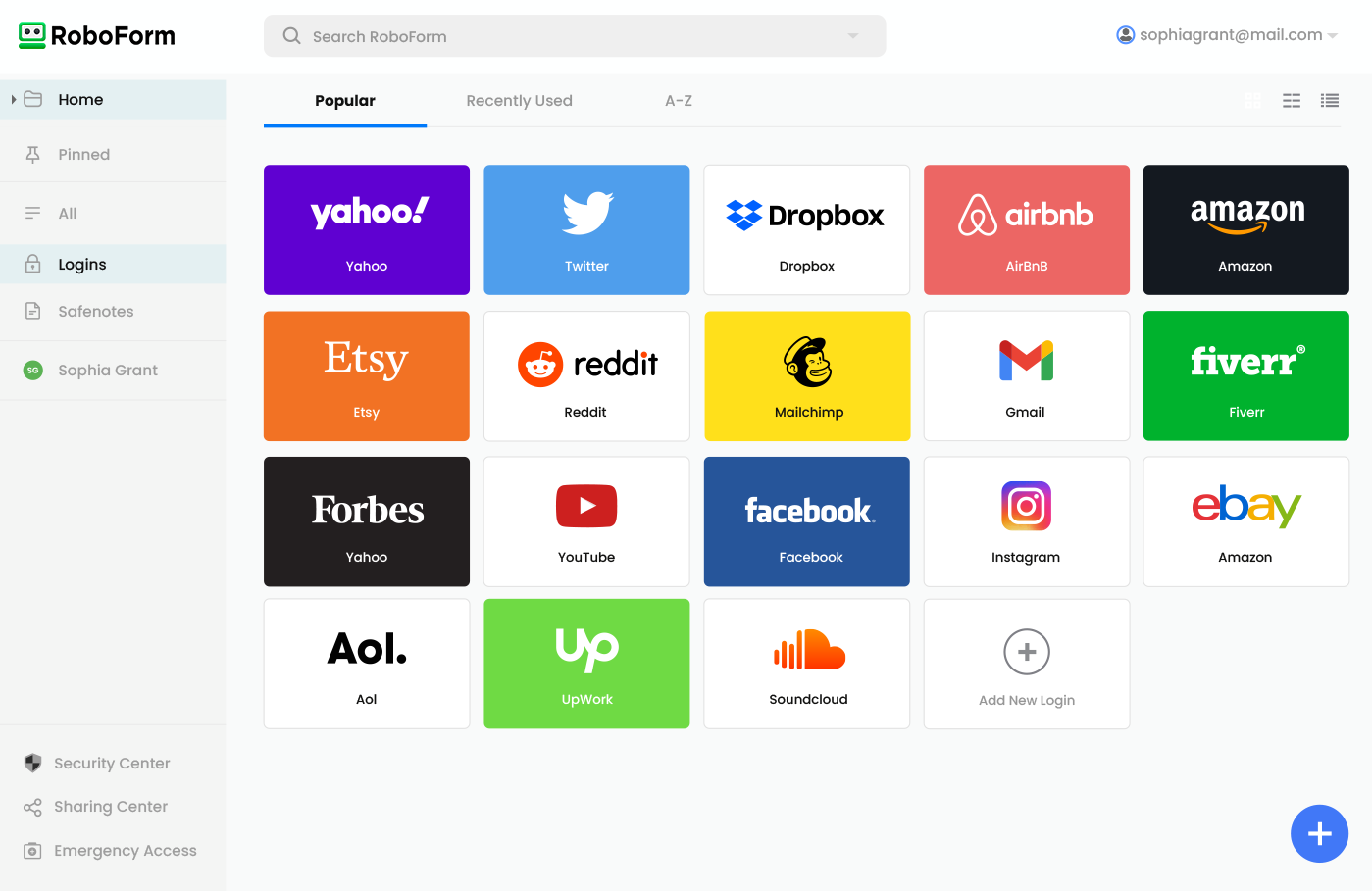
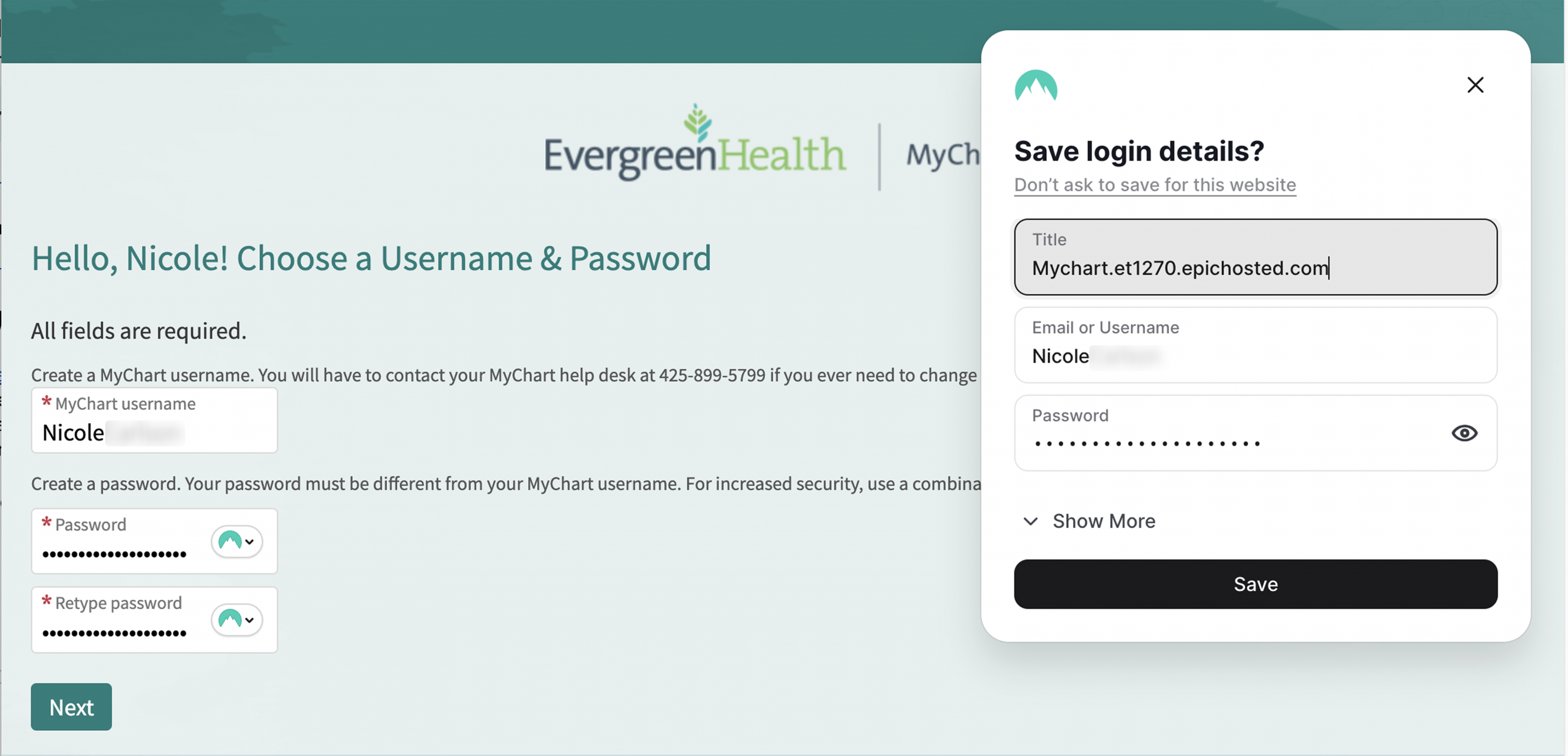
RoboForm consistently delivers the fastest and most accurate autofill experience I’ve tested. Whether it’s logging into websites, filling out lengthy forms, or auto-submitting credentials, RoboForm’s one-click functionality is tough to beat. The Chrome extension is lightweight and highly responsive, offering to save and autofill credentials at just the right time without being intrusive.
Security-wise, RoboForm uses AES-256 bit encryption with PBKDF2 SHA256 for secure local or cloud-based storage. Its zero-knowledge design ensures your data is only accessible to you. Multi-factor authentication (including TOTP app support) adds another layer of protection, and all plans include emergency access options for peace of mind.
Autofill performance is where RoboForm shines. It recognizes complex forms better than most competitors, including multi-step logins and long checkout pages. It even supports batch login, letting you log in to several sites with one click, something few other tools offer.
Who is RoboForm best for? RoboForm is perfect for users who want fast, precise autofill with minimal setup, especially those who fill out web forms frequently in Chrome.
Recent upgrades to RoboForm: Recent updates have improved form-matching accuracy, added support for Windows Hello logins, and enhanced the Admin Console for business users.
RoboForm pricing: RoboForm’s Premium plan starts at only $0.99 per month. A free version is available with basic password storage, while business plans offer centralized management and group sharing.
Pros and cons of RoboForm
Pros
Fastest one-click autofill and login available
Built-in TOTP authenticator with autofill support
Supports secure local or cloud-based storage
Great value with affordable individual and business plans
Cons
Desktop app interface feels outdated
Fewer advanced organizational tools compared to some competitors
Smooth, fast autofill across browsers and platforms
XChaCha20 encryption with zero-knowledge architecture
Built-in password health reports and breach monitoring
Free and affordable plans with cross-device syncing
Starting price (4.75/5)
Platform compatibility (4.8/5)
User experience (UX) (4.7)
Form-filling (4.8)
Security (5/5)
Two-factor authentication (2FA) (4.7/5)
Top features
$1.49/mo
Android, iOS, Linux, MacOS, Web (Chrome, Edge, Firefox, Opera, Safari), Windows
Intuitive interface, smooth sync, easy setup, plus passkey and email masking support
Auto-save and autofill functions across browsers perform reliably
Zero‑knowledge architecture, XChaCha20 encryption, audited by Cure 53
Supports TOTP, FIDO U2F (YubiKey), and authenticator apps
Unlimited passwords
Autofill
Breach scanner
Passkeys
Email masking
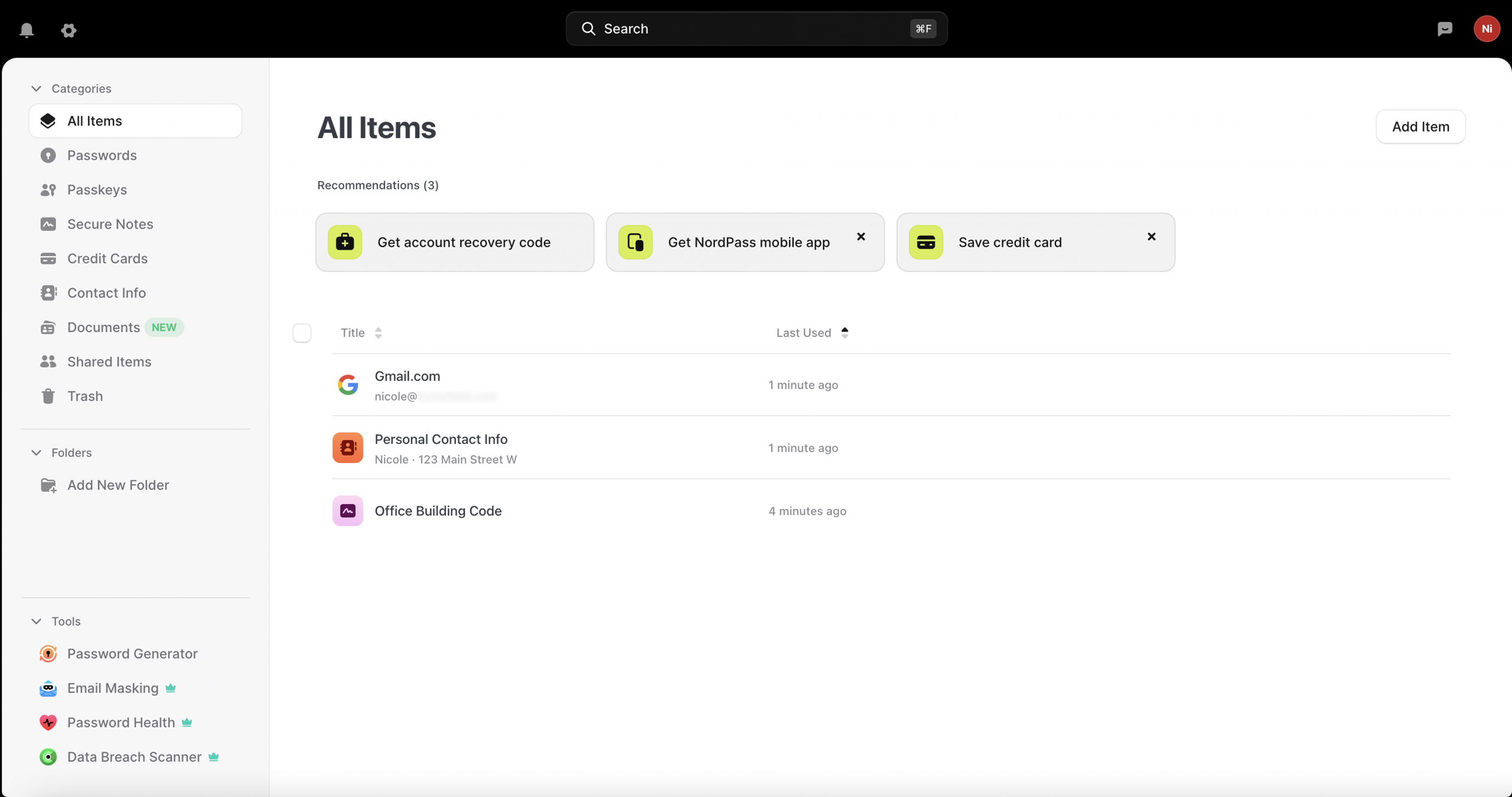
NordPass delivers one of the most seamless and secure autofill experiences available, particularly when used in Google Chrome. Its browser extension is lightweight and intuitive, making it easy to save new credentials and autofill existing ones with just a few clicks. I found the Chrome integration smooth, with smart prompts and autofill suggestions that rarely got in the way.
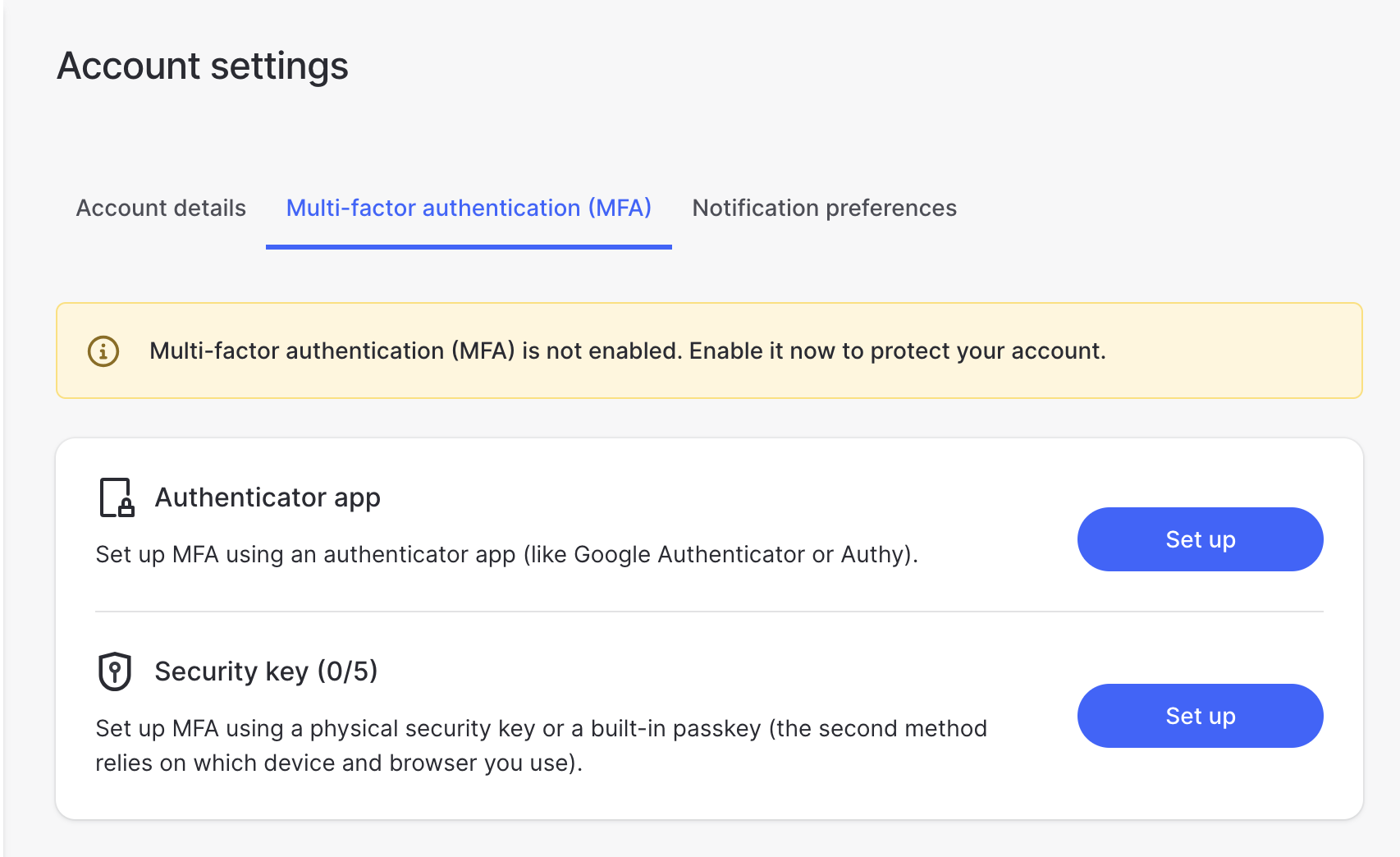
The standout strength of NordPass is still its top-tier security. It uses XChaCha20 encryption, which offers stronger protection than the more common AES-256 standard, and adheres to a strict zero-knowledge policy. Multi-factor authentication (MFA), support for passkeys, and compatibility with FIDO security keys add even more protection. I appreciated that all of this was available without cluttering the interface.
Autofill performance is fast and mostly accurate. It handles usernames, passwords, credit card info, and shipping addresses well. However, I did notice it occasionally misses certain custom fields, such as form-specific security questions or hidden dropdowns.
Who is NordPass best for?
NordPass is ideal for Chrome users who want a clean, fast, and secure password manager with a reliable autofill feature that just works across platforms.
Recent upgrades to NordPass:
Recent improvements include smoother autofill handling for multi-page login forms, smarter field recognition, and more stable Chrome extension updates across operating systems.
NordPass’s pricing:
The free version allows unlimited password storage on one device. Premium starts at $1.49/month (billed annually), and business plans begin at $3.99/user/month with a 30-day money-back guarantee.
Pros and cons of NordPass
Pros
Advanced XChaCha20 encryption with zero-knowledge architecture
Chrome extension is fast, smart, and intuitive
Built-in password health reports and breach monitoring
Affordable pricing with a generous free plan
Cons
Occasionally skips complex or non-standard form fields
No bundled extras like a VPN or identity theft protection
Autofill works well for logins but requires manual steps for complex forms
Supports TOTP apps, biometric login, FIDO U2F keys (like YubiKey), and KeeperDNA for extra protection
Supports TOTP apps, biometric login, FIDO U2F keys (like YubiKey), and KeeperDNA for extra protection
Unlimited password storage
Autofill and auto-save
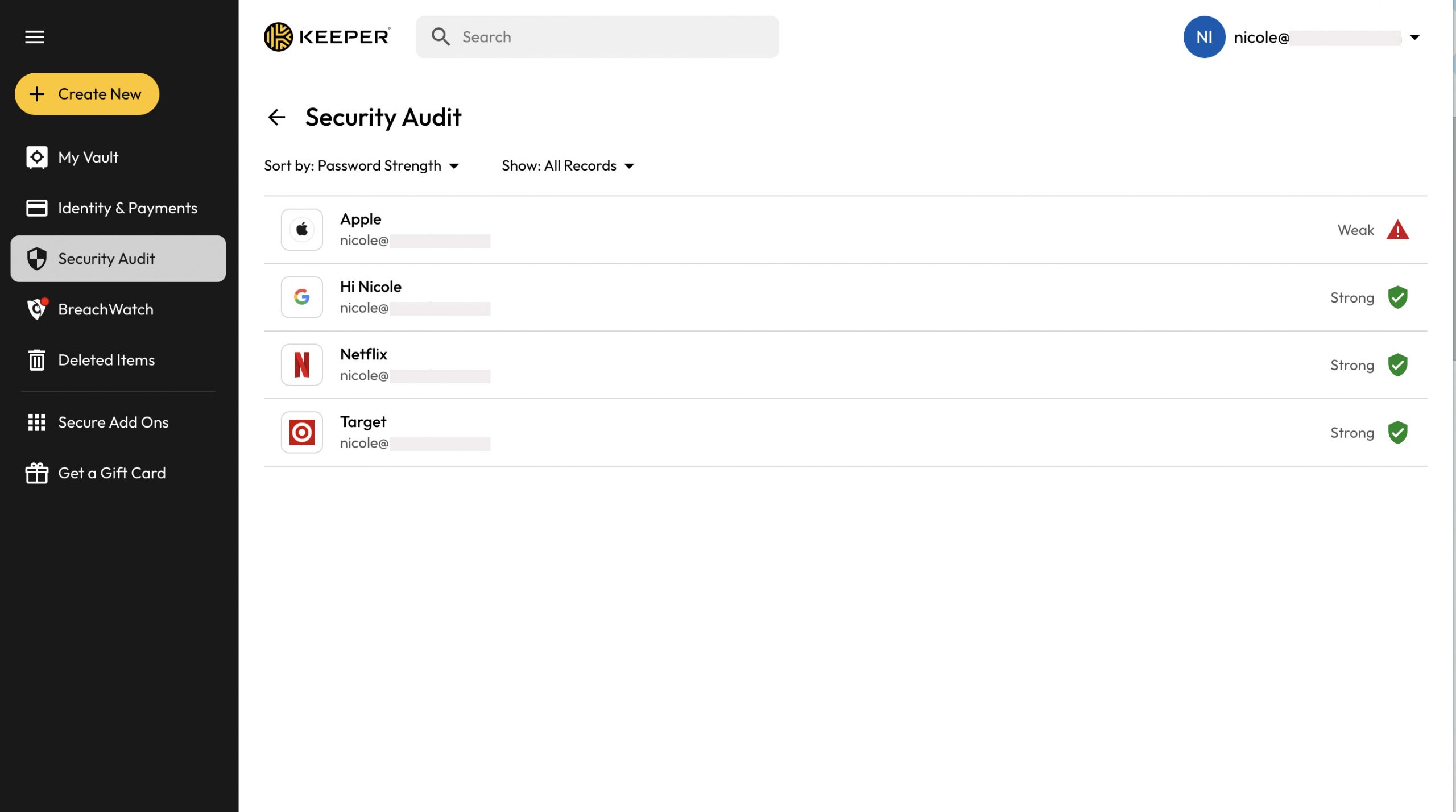
BreachWatch dark web monitoring (add-on)
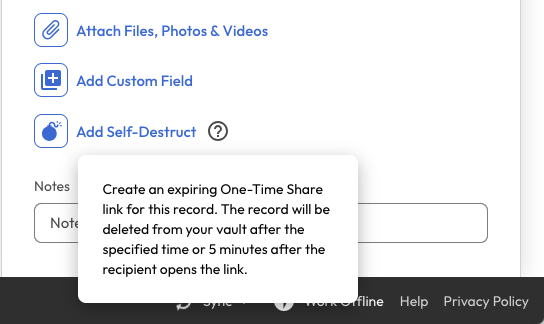
Secure record sharing
Vault customization options
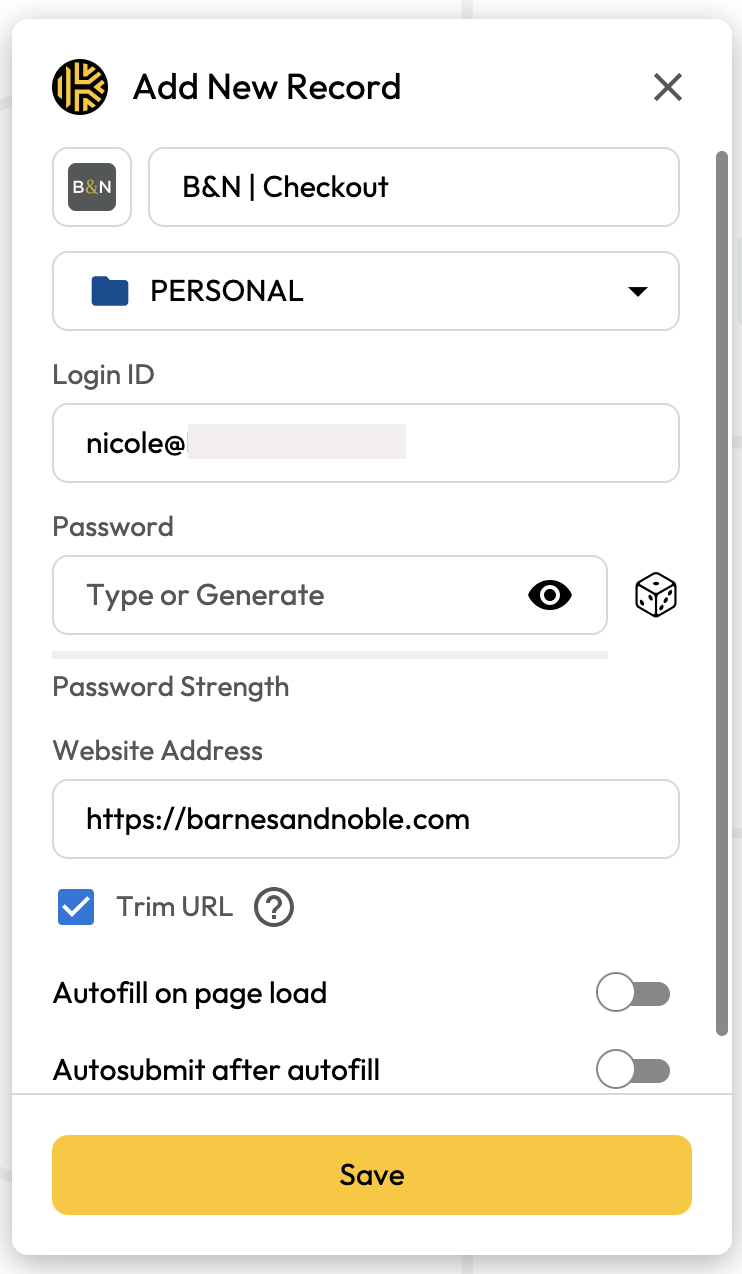
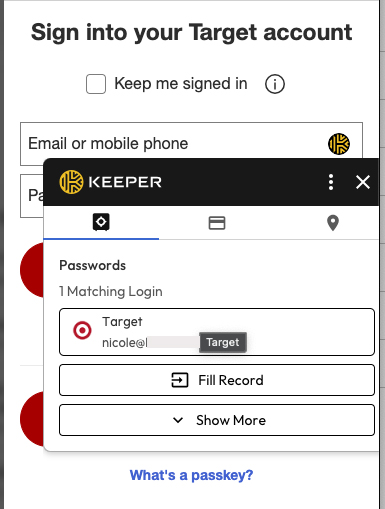
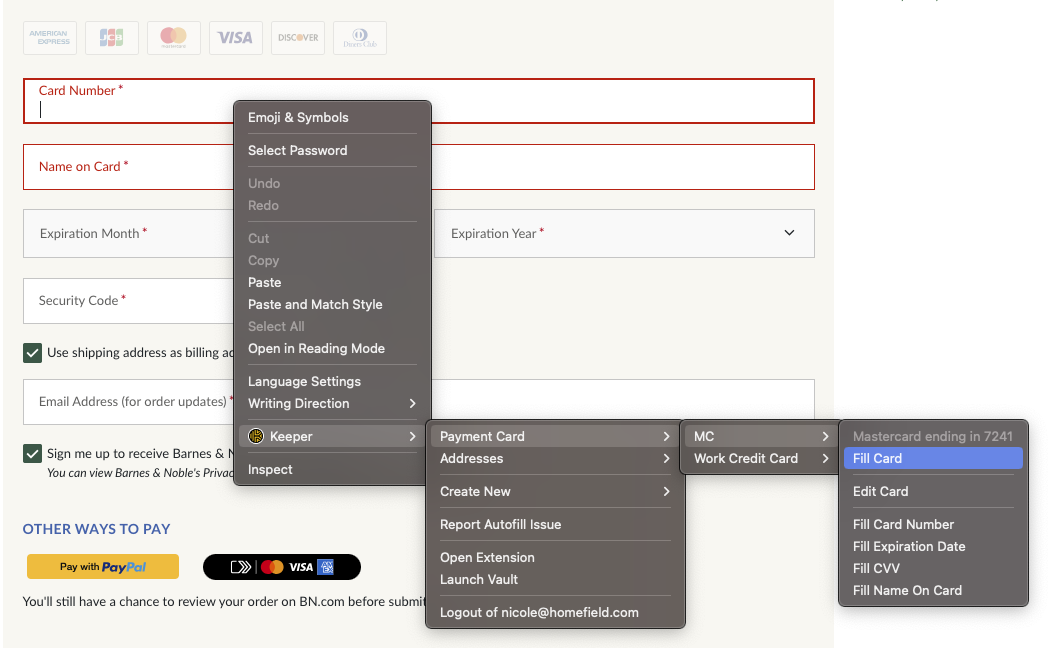
Keeper’s autofill is reliable and accurate for login credentials and basic web forms. The KeeperFill feature works across major browsers and mobile devices, helping users quickly enter usernames, passwords, credit cards, and addresses. I found it especially useful on standard login pages, where it filled credentials and submitted the form without error.
However, form-filling does fall short in a few areas. Keeper requires a manual click for each field when filling out more complex forms, such as billing details or dropdown menus. While this adds accuracy, preventing incorrect autofills, it does make the process slower than one-click options offered by competitors like RoboForm.
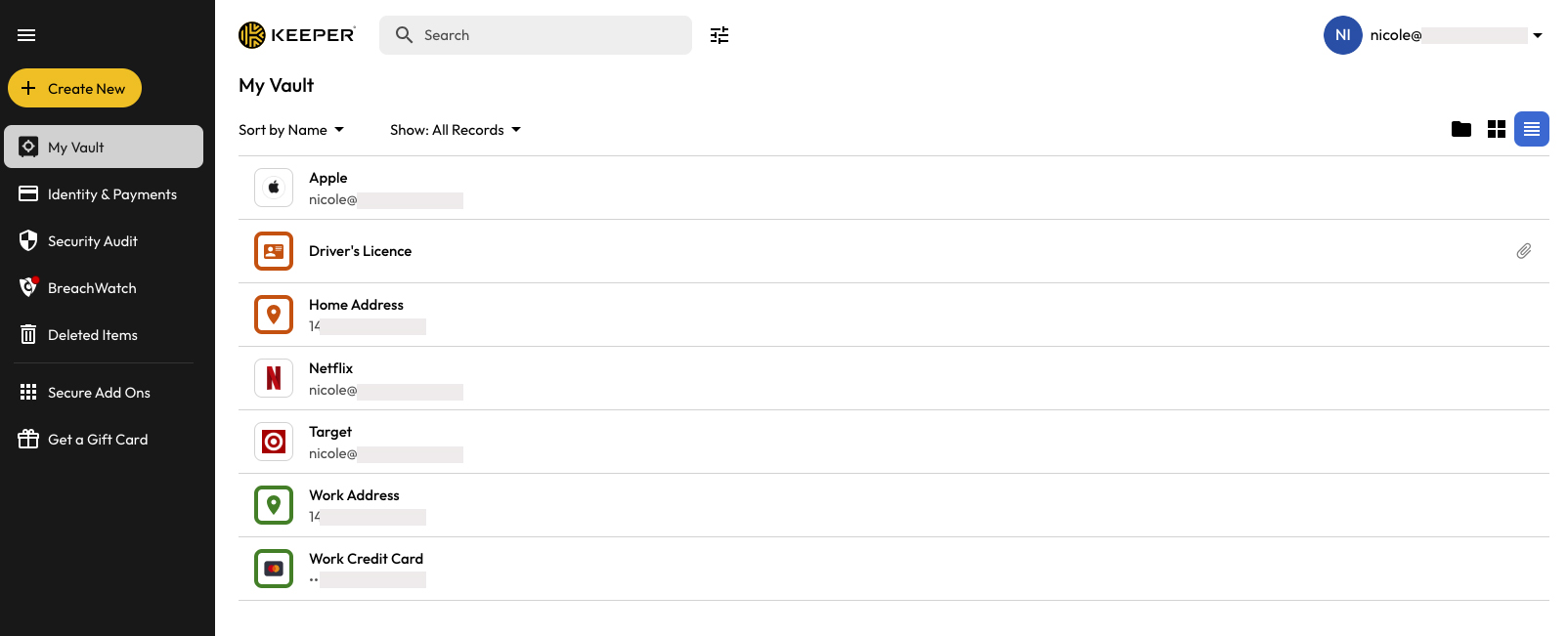
On the plus side, I appreciated how Keeper expands autofill beyond just the browser. KeeperFill for Apps works with native desktop applications, offering keystroke macros and hotkeys to fill login fields even outside your browser. This makes it a powerful option for users who manage logins across both web and software platforms.
Who is Keeper best for?
Keeper is best for users who want precise autofill performance across browsers and applications. It’s ideal for small businesses or advanced users who prefer more control over how credentials are filled.
Recent upgrades to Keeper:
Keeper recently enhanced its autofill performance, improving how it handles multi-field forms and login pages across browsers and apps. It also upgraded the vault interface and KeeperFill for Apps feature, making it easier to organize records and autofill credentials in desktop applications.
Keeper pricing:
Keeper’s Individual plan starts at $1.79/month (billed annually), with promotional rates dropping as low as $2.33/month. The Family plan includes five premium accounts starting at $3.83/month, with discounts as low as $4.96/month for a one-year term. There’s also a free plan, but it’s limited to a single mobile device and only stores up to 10 records.
Pros and cons of Keeper
Pros
Reliable autofill for logins and web forms
Works across browsers, mobile, and desktop apps
KeeperFill for Apps enables native application support
Strong security with breach monitoring and zero-knowledge architecture
While I chose NordPass as the best password manager with autofill, RoboForm and Keeper are also strong contenders. All three deliver fast, secure, and seamless form-filling that makes logging in and managing credentials a breeze.
These providers stood out for three key reasons — reliable autofill performance, strong security protocols, and easy-to-use interfaces. RoboForm is known for its fast one-click logins, Keeper offers great value and robust team features, and NordPass combines strong encryption with a clean, intuitive experience. All three offer pricing under $3/month, with NordPass and RoboForm also providing generous free trials or plans.
You may find similar features in other password managers, but these three rose to the top for their combination of performance, usability, and value.
Other password managers we considered but didn’t rank among the best include:
Bitwarden: One of the best free password managers with 2FA support, but lacks premium features like breach monitoring and full autofill customization.
LastPass: Offers solid features at a competitive price, but its history of data breaches and limited customer support are concerns.
Dashlane: Known for its built-in VPN and polished interface, but its free version is extremely limited and autofill can be inconsistent.
1Password: Excellent for teams and power users with advanced sharing features, though its autofill isn’t always as intuitive on all platforms.
See how the best password managers compare to other top-tier options:
Provider
Best Overall Password Manager with Autofill
Score (4.8)
Starting Price $0.99/mo Premium
Free Trial 30-day
Encryption AES 256-bit encryption
2FA
Platform Compatibility Windows, Mac, iOS, and Android support for their respective major browsers, including Microsoft Edge
Platform Compatibility Windows, macOS, Linux, Android, iOS, and popular browsers, such as Google Chrome, Firefox, Microsoft Edge, Brave, Opera, and Safari
Encryption AES-256 plus PBKDF2 hashing with SHA-256 salting
2FA
Platform Compatibility Windows, macOS, Linux, Android, iOS, and popular browsers, such as Google Chrome, Firefox, Microsoft Edge, Brave, Opera, and Safari
These third-party apps manage your passwords, creating and storing them so all you have to do is remember a secure master password. Once you sign up with a service and install any necessary software or browser extensions, the password manager will suggest and save strong passwords for your accounts and websites you visit.
Can password managers be trusted?
Most password managers use end-to-end 256-bit AES encryption (the same standard used by many banks and government institutions) and “no-knowledge architecture.”
These services scramble up your information in a way that can only be decoded by your device. Your data is safe, even in the event of a breach, because the provider typically doesn’t have that information.
Is it worth paying for a password manager?
Many password managers (such as Dashlane) offer free versions only limited by the ability to be used on other devices — for example, from a phone to a computer. This may be enough for many people, though the yearly cost for a premium version used across many platforms is usually only around $36 a year.
What if I need to change my autofill information?
All password managers allow you to edit your vault information in the case of errors or changes — simply find the entry that needs to be changed and update it with the new information. However, most password managers recognize changes automatically and will update your information as you alter it.
What if I have multiple accounts/addresses for the same website?
Most password managers (including those listed above) will give you a drop-down list of options if there are numerous saved addresses or logins in your vault. Simply choose the account or address from that list, and the relevant information will be filled in.
Do password managers track my information?
No — trustworthy password managers use a zero-knowledge protocol, encrypting your information before it is stored on servers, and no one can read it. Another option is to use a password manager that offers local data storage so your passwords never leave your local network.
How I Rated the Best Password Managers With Autofill
On the surface, all password managers essentially fulfill the same functions — they generate and store passwords. In creating our list of recommendations for the best password manager, we dug deeper, comparing software on what matters most, including price, platform compatibility, security, and other factors.
However, we weighted the autofill experience more heavily for this particular list. Plenty of great password managers fumble when it comes to autofill. For these recommendations, I made sure that autofill worked as flawlessly as possible.
I signed up for a plan with each provider to test:
Plan value: Most password managers offer various subscription plans from free to around $20 per month. While free plans may be sufficient for some, those that need more functionality may prefer paid plans.
Platform compatibility: You likely access your online accounts from multiple devices, including desktops, laptops, tablets, phones, and different web browsers. Your password manager should be compatible with various devices, operating systems, and browsers and sync seamlessly between them all.
UX: This is how you interface with all the features and functions of your new password manager — if it’s bad, you’ll be less likely to use the service. While this is a highly subjective category, and some will disagree, it’s important to provide an overview based on my experience.
Form filling: A password manager doesn’t have to include form-filling, but it’s somewhat standard, and the ease with which it performs that function can be the deciding factor in which password manager you ultimately choose.
Security: Since a password manager is first and foremost a security tool, it should come with all of the most up-to-date standard security features. This includes the highest level of available encryption (256-bit AES with PBKDF2-HMAC-SHA512), 2FA, such as biometric logins or multi-factor authentication, and a password generator.
2FA: Used all over the internet to protect your accounts, this is quickly becoming a standard security practice. 2FA is a great way to secure more sensitive accounts to ensure they’re not breached.
Kallstrom, The Password Manager, is a Cyber Team Lead for a Department of Defense (DOD) contracting company in Huntsville, Alabama, and has worked as a Computer Network Defense (CND) Cyber Analyst. An author and content creator for a cybersecurity academy, Kallstrom spent nearly 15 years in the Army as a musician before entering the cybersecurity field.
He holds a bachelor’s degree in music from Thomas Edison State University and a master’s in organizational development and leadership from the University of the Incarnate Word.
Kallstrom has completed several Computing Technology Industry Association (CompTIA) courses, including Security+, Network+, A+ Core 1, and A+ Core 2. He earned a CompTIA Security+ Certification. Additionally, he has completed the Cyber Warrior Academy program with more than 800 hours of hands-on, intensive, and lab-driven technical training in cybersecurity methods and procedures.
Passionate about all things cyber, Kallstrom was a speaker on a panel at the 2022 InfoSec World conference, giving a talk entitled “Hacking into a Cyber Career – True Stories.” Kallstrom is also a mentor to entry-level cybersecurity candidates seeking to break into the field. When he’s not working, he still enjoys playing guitar and fishing (not phishing).
Related Posts
The Best Firefox Password Managers of 2026
RoboForm is the best Firefox password manager of 2026 based on our testing. See our picks for the best Firefox password managers. Read More
The Best Password Managers of 2026
RoboForm earned our top spot for best password manager in 2026, with NordPass and Proton Pass as close runners-up after testing 12+ password managers across desktop, mobile, and browser. Read More
The Best Windows Password Managers of 2026
RoboForm is the best Windows password manager based on our testing. See our picks for the best Windows password managers. Read More
The Best Password Managers with Offline Features of 2026
RoboForm is the best password manager with local storage of 2026 based on our testing. Read on to see our other picks for the best password managers. Read More
The Best Free Password Managers of 2026
Bitwarden is the best free password manager of 2026 based on our testing. See our picks for the best free password managers. Read More